Please Take The 2018 SSC Reader Survey

If you’re reading this and have previously read at least one Slate Star Codex post, please take the 2018 SSC Survey.

This year’s survey is in three sections. If you’re strapped for time, just take Section 1. If you have a little more time, take both Sections 1 and 2. If you have a lot of time, take all three sections. Each section will take about ten minutes. There’s some more information on the survey itself.

You can talk about it in the comments, but don’t read them until you’re done taking the survey.

Posted in Uncategorized | Tagged | 653 Comments

Links 12/17: Silent Site, Holy Site

The world’s largest hotel is in Saudi Arabia, hosts 10,000 guests, and looks pretty much how you would expect the world’s largest hotel in Saudi Arabia to look.

Legends of Chinese immigrants in California, unsourced, sometimes a bit implausible. “John the Chinese laundry man was the laughingstock of Weaverville, California. For months he washed the Anglo miners’ clothes and never charged a penny for his services. But a year later one of the miners came across John wearing fine clothes in Sacramento. He had washed enough gold dust out of pants cuffs and shirttails to set himself up for life.”

Common vs. Specific Factors In Psychotherapy – Opening The Black Box. Key quote: “Neither variability in competence nor adherence [to the principles of the therapy involved] was related to patient outcome…extent of training might also not be relevant to outcome.”

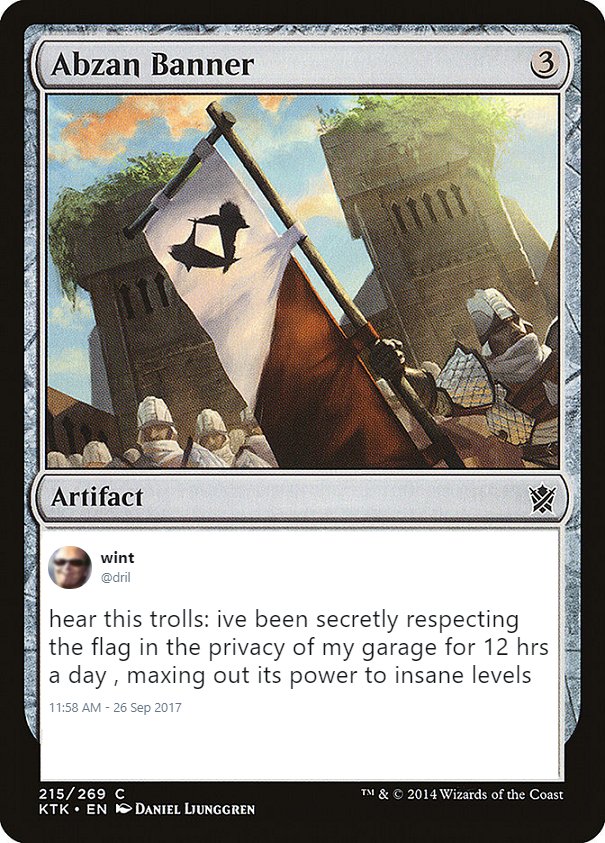
Magic cards with @dril quotes as text. EG 1, 2

The size of a nation’s legislature tends to be about the cube root of its population. Also, the US House of Representatives is “one of the world’s most undersized” legislatures.

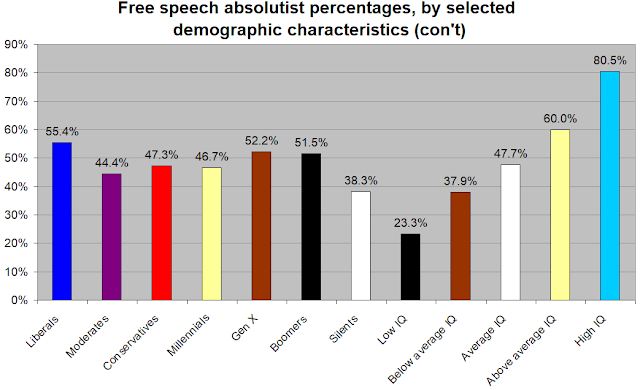
Sam Altman on the increasingly repressive climate in the Bay Area; makes some of the same points as my article about Kolmogorov complicity, but better, and with more personal experience. Tyler Cowen’s response. Related: GSS survey data shows high IQ predicts “free speech absolutism”.

Related: Heterodox Academy offers OpenMind, “a free, online platform designed to depolarize communities and foster mutual understanding across differences”.

More on the link between autism and transgender, with a few more studies than I’d seen before. Although only 5-10% of autistics have gender dysphoria, up to 25%-50% of transgender people may be autistic.

Late Christmas shopping idea: gravitational distortion placemats.

Contra Turkheimer and others, a new team finds no tendency for environmental influence on intelligence to be stronger in the poor, not even in the United States. [EDIT: Or maybe it doesn’t contradict Turkheimer, just show his results don’t extend to adults]

Also, even though the obvious evo psych explanation for bitter taste is that it’s supposed to warn us of potentially toxic molecules, there’s no real relationship between bitterness and toxicity.

The New I-66 Tolls Offer Great Insight Into Commuter Psychology. Commuters okay with a road being illegal to use (except for certain groups), but angry when it was legal to use but with a very high toll.

People Learned To Survive Disease; We Can Handle Twitter. Interesting take on cultural evolution including a micro-review of new James Scott book.

Some rare good news: the grad student waiver tax will not be in the final tax bill.

This month in the FDA: liberalization of rules on genetic tests like 23andMe (official statement, media summary). Related: probably legal for police to get your DNA from a genetic testing company if you’re a suspect; some good discussion of the exact warrant requirements buried in the Reddit comments. 23andMe has announced they will fight any such requests; unclear what other companies will do.

No, it’s not just your imagination: recent mystery interstellar asteroid Oumuamuamuamuamuamuamua does look kind of like a spaceship. Some good discussion in the comments here. And Robin Hanson on what it might teach us about interstellar space.

Venus only has one earthquake every hundred million years or so, but it’s a doozy.

Was James K. Polk the greatest US president? And Garrett Jones on which US president made the largest positive contribution to global income (hint: it’s James K. Polk)

The 100 most-discussed scientific papers of the year. A combination of health-relevant, politics-relevant, clickbaity, and groundbreaking new science. My girlfriend is lead author of #16.

The latest thing AI is outperforming humans at, this time very close to my heart: fantasy cartography. Example here. H/T Gwern.

Related, though you’ve probably seen it already: DeepMind has made an AI that can learn to play at superhuman level in various games including chess, Japanese chess, and Go – after just a few hours of practice.

Related: MIRI’s 2017 fundraiser. For those of you who don’t know, they’re a research institute that looks into the possibility of future AI superintelligence and how to make it safe for humans. I can vouch for them as good people; see also Zvi Mowshowitz’s I Vouch For MIRI.

Percent of people in different countries on who think life is better vs. worse than fifty years ago. More vs. less market freedom seems to be pretty big explanatory variable; being in Latin America doesn’t help.

This article purports to rank all generals and prove that Napoleon was the best. It’s gotten a lot of coverage, but it seems trivially wrong to me – as far as I can tell, it gives each general credit for their win vs. loss record, but doesn’t adjust for number of battles. So a general who fought 30 battles and won 50% would be “better” than a general who fought 10 battles and won 100%. As such, I can’t endorse it – but it’s a cool way of looking at things and I hope someone tries something similar and does it right – which would probably involve starting with a prior that each general is average and treating each battle as a new piece of Bayesian evidence.

We often hear that the amount parents talk to their baby is vital in explaining their development and life outcomes, so Scientific American profiles a South American tribe where parents practically never talk to their babies. But how many people from that tribe get into Ivy League colleges, HUH SCIENTIFIC AMERICAN?

In the IGM poll of economists, which I’ve cited a few times here as a good measure of expert opinion, top economists generally favor repealing Net Neutrality. H/T Buck, who writes that “if you think that repealing net neutrality is clearly bad, I’d love to bet you about it. Betting is a tax on bullshit and I feel like the internet is particularly full of bullshit at the moment; I’d like to do my part to clean it up a little while also hopefully making a little money. I’d love to hear your concrete predictions about how the world will be worse as a result of the repeal of net neutrality. I’m willing to spend at least a thousand dollars betting on this topic.”

Bay Area politicians die as they live: causing delays for local commuters.

Posted in Uncategorized | Tagged | 433 Comments

OT91: Opaean Thread

This is the bi-weekly visible open thread. Post about anything you want, ask random questions, whatever. You can also talk at the SSC subreddit or the SSC Discord server. Also:

1. Some people arguing at length against my post on taxes and on harassment. But comment of the week is Cameron Mahoney on pharma scams.

2. New ad for for the AI Safety Reading Group, meets every Wednesday night on Skype.

3. Related: MIRI is holding their annual fundraiser.

4. Some very minor updates to the Mistakes, Comments, and Predictions pages on the top.

5. I know many people left Patreon because of their plan to levy big fees on small donations. Patreon has since said they’re not going to do that. If you left my Patreon because of that, you may want to un-leave. I was considering switching from a per-post to per-month donation system anyway , just because most people program their per-post donations so they only count for the first few posts per month anyway, but I’m not sure. I’ll probably include a question on the survey about what people prefer.

6. Speaking of which, I’ve been busy working on a new survey. Expect it out in a few days to weeks.

7. Merry holidays to everyone!

Posted in Uncategorized | Tagged | 846 Comments

Classified Thread 4: Vinson Classif

This is the…monthly? bimonthly? occasional?…classified thread. Post advertisements, personals, and any interesting success stories from the last thread.

Posted in Uncategorized | Tagged | 417 Comments

What To Make Of New Positive NSI-189 Results?

I.

I wanted NSI-189 to be real so badly.

Pharma companies used to love antidepressants. Millions of people are depressed. Millions of people who aren’t depressed think they are. Sell them all a pill per day for their entire lifetime, and you’re looking at a lot of money. So they poured money into antidepressant research, culminating in 80s and 90s with the discovery of selective serotonin reuptake inhibitors (SSRIs) like Prozac. Since then, research has moved into exciting new areas, like “more SSRIs”, “even more SSRIs”, “drugs that claim to be SNRIs but on closer inspection are mostly just SSRIs”, and “drugs that claim to be complicated serotonin modulators but realistically just work as SSRIs”. Some companies still go through the pantomime of inventing new supposedly-not-SSRI drugs, and some psychiatrists still go through the pantomime of pretending to be excited about them, but nobody’s heart is really in it anymore.

How did it come to this? Apparently discovering new antidepressants is really hard. Part of it is that depression has such a high placebo response rate (realistically probably mostly regression to the mean) that it’s hard for even a good medication to separate much from placebo. Another part is that psychopharmacology is just a really difficult field even at the best of times. Pharma companies tried, tried some more, and gave up. All the new no-really-not-SSRIs are the fig leaf to cover their failure. Now people are gradually giving up on even pretending. There are still lots of exciting possibilities coming from the worlds of academia and irresponsible self-experimentation, but the Very Serious People have left the field. This is a disaster, insofar as they’re the only people who can get things through the FDA and into the mass market where anyone besides fringe enthusiasts will use them.

Enter NSI-189. A tiny pharma company called Neuralstem announced that they had a new antidepressant that worked on directly on neurogenesis – a totally new mechanism! nothing at all like SSRIs! – and seemed to be getting miraculous results. Lots of people (including me) suspect neurogenesis is pretty fundamental to depression in a way serotonin isn’t, so the narrative really worked – we’ve finally figured out a way to hit the root cause of depression instead of fiddling around with knobs ten steps away from the actual problem. Irresponsible self-experimenters managed to synthesize and try some of it, and reported miraculous stories of treatment-resistant depressions vanishing overnight. Someone had finally done the thing!

There are many theories about what place our world holds in God’s creation. Here’s one with as much evidence as any other: Earth was created as a Hell for bad psychiatrists. For one thing, it would explain why there are so many of them here. For another, it would explain why – after getting all of our hopes so high – NSI-189 totally flopped in FDA trials.

I don’t think the data have been published anywhere (more evidence for the theory!), but we can read off the important parts of the story from Neuralstem’s press release. In Stage 1, they put 44 patients on 40 mg NSI-189 daily, another 44 patients on 80 mg daily, and 132 patients on placebo for six weeks. In Stage 2, they took the people from the placebo group who hadn’t gotten better in Stage 1 and put half of them on NSI-189, leaving the other half on placebo – I think this was a clever trick to get a group of people pre-selected for not responding to placebo and so avoid the problem where everyone does well on placebo and so it’s a washout. But all of this was for nothing. On the primary endpoint – a depression rating instrument called MADRS – the NSI-189 group failed to significantly outperform placebo during either stage.

Neuralstem’s stock fell 61% on news of the study. Financial blog Seeking Alpha advised readers that Neuralstem Is Doomed. Investors tripped over themselves to withdraw support from a corporation that apparently was unable to handle the absolute bread-and-butter most basic job of a pharma company – fudging clinical trial results so that nobody figures out they were negative until half the US population is on their drug.

From last month’s New York Times:

The first thing you feel when a [drug] trial fails is a sense of shame. You’ve let your patients down. You know, of course, that experimental drugs have a poor track record – but even so, this drug had seemed so promising (you cannot erase the image of the cancer cells dying under the microscope). You feel as if you’ve shortchanged the Hippocratic Oath […]

There’s also a more existential shame. In an era when Big Pharma might have macerated the last drips of wonder out of us, it’s worth reiterating the fact: Medicines are notoriously hard to discover. The cosmos yields human drugs rarely and begrudgingly – and when a promising candidate fails to work, it is as if yet another chemical morsel of the universe has been thrown into the dumpster. The meniscus of disappointment rises inside you: That domain of human biology that the medicine hoped to target may never be breached therapeutically.

And so the rest of us gave a heavy sigh, shed a single tear, and went back to telling ourselves that maybe vortioxetine wasn’t exactly an SSRI, in ways.

II.

But the reason I’m writing about all of this now is that Neuralstem has just put out a new press release saying that actually, good news! NSI-189 works after all! Their stock rose 67%! Investment blogs are writing that Neuralstem Is A Big Winner and boasting about how much Neuralstem stock they were savvy enough to hold on to!

What are these new results? Can we believe them?

I’m still trying to figure out exactly what’s going on; the results themselves were presented at a conference and aren’t directly available. But from what I can gather from the press release, this isn’t a new trial. It’s new secondary endpoints from the first trial, that Neuralstem thinks cast a new light on the results.

What are secondary endpoints? Often during a drug trial, people want to measure whether the drug works in multiple different ways. For depression, these are usually rating scales that ask about depressive symptoms – things like “On a scale of 1 to 5, how sad are you?” or “How many times in the past month have you considered suicide?”. You could give the MADRS, a scale that focuses on emotional symptoms. Or you could give the HAM-D, a scale that focuses more on psychosomatic symptoms. Or since depression makes people think less clearly, you could give them a cognitive battery. Depending on what you want to do, all of these are potentially good choices.

But once you let people start giving a lot of tests, there’s a risk that they’ll just keep giving more and more tests until they find one that gives results they like. Remember, one out of every twenty statistical analyses you do will be positive at the 0.05 level by pure coincidence. So if you give people ten tests, you’ve got a pretty good chance of getting one positive result – at which point, you trumpet that one to the world.

Statisticians try to solve this loophole by demanding researchers pre-identify a primary endpoint. That is, you have to say beforehand which test you want to count. You can do however many tests you want, but the other ones (“secondary endpoints”) are for your own amusement and edification. The primary endpoint is the one that the magical “p = 0.05 means it works” criteria gets applied to.

Neuralstem chose the MADRS scale as their primary endpoint and got a null result. This is what they released in July that had everybody so disappointed. The recently-released data are a bunch of secondary endpoints, some of which are positive. This is the new result that has everybody so excited.

You might be asking “Wait, I thought the whole point of having primary versus secondary endpoints was so people wouldn’t do that?” Well…yes. I’m trying to figure out if there’s any angle here besides “Company does thing that you’re not supposed to do because it can always give you positive results, gets positive results, publishes a press release”. I am not an expert here. But I can’t find one.

The pattern of positive results shows pretty much the random pattern you would expect from spurious findings. They’re divided evenly among a bunch of scales, with occasional positive results on one scale followed by negative results on a very similar scale measuring the same thing. Most of them are only the tiniest iota below p = 0.05. Many of them only work at 40 mg, and disappear in the 80 mg condition; there are occasional complicated reasons why drugs can work better at lower doses, but Occam’s razor says that’s not what’s happening here. One of the results only appeared in Stage 2 of the trial, and disappeared in Stage 1 and the pooled analysis. This doesn’t look exactly like they just multiplied six instruments by two doses by three ways of grouping the stages, got 36 different cells, and rolled a die in each. But it’s not too much better than that. Who knows, maybe the drug does something? But it sure doesn’t seem to be a particularly effective antidepressant, even by our very low standards for such. Right now I am very unimpressed.

III.

Except…why did their stock jump 67%? We just got done talking about the efficient market hypothesis and the theory that the stock market is never wrong in a way detectable by ordinary humans.

First of all, maybe that’s wrong. My dad is a doctor, and he swears that he keeps making a lot of money from medical investments. He just sees some new medical product, says “Yeah, that sounds like the sort of thing that will work and become pretty popular”, and buys it. I keep telling him this cannot possibly work, and he keeps coming to me a year later telling me he made a killing and now has a new car. Maybe all financial theory is a total lie, and if you get a lucky feeling when looking at a company’s logo you should invest in them right away and you will always make a fortune.

Or maybe the it’s that it’s not investors’ job to answer “Does this drug work?” but rather “Will investing in this stock make me money?”. Neuralstem has mentioned that they’ll be bringing these new results in front of the FDA, presumably in the hopes of getting a Phase III trial. FDA standards seem to have gotten looser lately, and maybe a fig leaf of positive results is all they need to give the go ahead for a bigger trial anyway – after all, they wouldn’t be approving the drug, just saying more research is appropriate. Then maybe that trial would come out better. Or it would be big enough that they would discover some alternate use (remember, Viagra was originally developed to lower blood pressure, and only got switched to erectile dysfunction after Phase 1 trials). Or maybe Neuralstem will join the 21st century and hire a competent Obfuscation Department.

I don’t know. I’m beyond caring. The sign of a really deep depression is abandoning hope, and I’ve abandoned hope in NSI-189…

…which just leaves me even more time to be excited about SAGE-217, the novel GABA-A positive allosteric modulator that just passed Phase 2 trials! This one is going to be great!

[EDIT: Wait, is SAGE-217 just a weird attempt to rebrand benzodiazepines? Surely it’s got to be more than that, right?]

Posted in Uncategorized | Tagged | 171 Comments

Tax Bill 3: Don’t Mess With Taxes

I.

Thanks to everyone who commented on my last two posts, especially the many people who disagreed with me. Two things I will admit I got mostly wrong:

1. I was wrong to say there was “no case” for the tax bill. Aside from all of the minor provisions which can be good or bad, the case for slashing corporate rates is that they’re more distortionary and less efficient than other forms of taxation. Thanks to everyone who pointed this out to me.

2. Several people brought up problems with the article saying CEOs say they will just give the money back to shareholders, most notably that giving money back to shareholders may stimulate the economy in other ways.

But two things I still think are true:

1. Seriously, guys, I admit I don’t know as much about economics as some of you, but I am working off of a poll of the country’s best economists who came down pretty heavily on the side of this not significantly increasing growth. If you want to tell me that it would, your job isn’t to explain Economics 101 theories to me even louder, it’s to explain how the country’s best economists are getting it wrong. You may find this book review relevant.

2. I stand by my claim that I care less about economic growth than about where the money goes. That includes caring less about distortionary taxation, deadweight loss, and all those other concepts.

Suppose Alice is an effective altruist who supports whatever charity you think is most important and does a really good job of it. Every dollar she spends saves multiple lives. She lives in a town of 1000 people where nobody else is an effective altruist and everyone else just lives a pretty decent life and spends their extra money on, I don’t know, breeding virtual cats or something.

A demon places a curse on Alice’s neighbor Bob. Every time Bob pays a dollar in taxes, it destroys a random two dollars’ worth of wealth somewhere in the town.

The town elders meet and decide that for some reason they have to lower taxes either on Alice or Bob. The economic case for Bob is overwhelming – taxes on him are especially inefficient because of the extra wealth they destroy.

Still, I would want a tax cut for Alice. It seems like the only important thing that happens at all in this town is Alice’s charitable donations. The amount I care about this town’s utility focuses pretty much entirely on that. We could give the break to Bob, and have a nominally better economy, but it would just lead to more people buying virtual cats. It could be that the extra two dollars’ of wealth destroyed by Bob’s taxes was some sort of useful machinery, and so taxing Bob harms economic growth. Again, it is hard to care, except insofar as that hurts Alice, the only person in town whose wealth matters much for anyone’s utility.

I can imagine a world in which Bob’s curse was stronger, and every dollar Bob was taxed destroyed a million dollars in value, and soon any tax on Bob meant the citizens of the town were starving to death and all of them including Alice went bankrupt. But right now the tax on Bob isn’t big enough to be worse for Alice than a tax on Alice, and since Alice is the only important person in this situation, I don’t care.

I can also imagine a world where a wise economist comes to town. She says “Alice’s work is the most important thing in this town, but taxing Bob destroys wealth for no reason. Some of the town elders support tax breaks for Bob, and others support tax breaks for Alice. But we can give the tax break to Bob, and then all the people who saved $2 each from the curse not being activated can give $1.50 to Alice. That way Bob is better off, Alice is better off, and potential curse victims are better off.”

This is the best argument in favor of wealth creation instead of redistribution. But right now we’re not doing that. We just create the wealth and then don’t redistribute it, except through charity, which is a rounding error, and taxes, which everyone agrees this bill causes there to be less of. If we actually had Pareto-optimal wealth redistribution, then of course, create as much wealth as possible and redistribute it Pareto-optimally. Since we don’t, we’re kind of stuck.

My takeaway from this story is that in societies with a lot of marginal-value-of-money inequality, economic growth is potentially less useful than working to keep the money with people who can spend it on higher-marginal-value things. Consider three variables:

1. How low is the marginal utility of money for the person holding the average dollar, if no efforts are made to redistribute it?

2. How much economic growth are we sacrificing by choosing redistribution?

3. How high a marginal utility of money do we get by redistributing it?

Point 1 is why I stress the research showing increasing inequality eg most money going to people rich enough not to really have much use for it.

Point 2 is why I stress the economists saying that the gains from cutting corporate taxes really won’t have that much effect on growth.

Point 3 is the one I’m least sure about. If the government were a perfect effective altruist, it would be no contest – them having the money would be thousands of times more effective than random corporations (or even random middle-class people) having it. Even if the government were to give the money as a tax break to the working classes, it still seems really obvious to me that the increased utility swamps any effect from higher economic growth. In reality, the tax cut is being funded by increasing the deficit. I don’t know whether that means we need to compare it to whatever is bad about having a higher deficit, or else take as a given that the deficit has a certain amount of slack, and then compare it to other things we could do with the same money.

Imagine the government went $100 billion into debt to build a giant bronze statue of George Washington. Should we be debating whether running up the deficit is really that bad? Should we be debating the artistic merit of giant bronze statues of Washington, and whether it’s actually a pretty good statue that boosts tourism in the area? Or should we be comparing it to the best possible use for that money?

(added: I would be 100% happy with a bill that cut corporate taxes exactly this much, then raised taxes somewhere else in an equally progressive way, causing there to be the same amount of taxes with less distortion)

II.

The fairest thing I can think of is to compare this use of $100 billion to just spreading $100 billion evenly among all the government’s existing priorities.

Suppose that this tax cut was vastly better at stimulating economic growth than any reasonable person expects, and it increased growth by 1% per year. Then it would create $200 billion in value. With extreme good luck, 3% of that might go to the poorest quintile, giving them an extra $6 billion.

Or suppose the government keeps the $100 billion and distributes it evenly according to its existing priorities. Half of the budget is entitlement programs, and 32% of those go to the poorest quintile, so they would get an extra $16 billion.

I’m sure these numbers are wildly off. But it’s hard to come up with remotely plausible numbers in which the poor and working-class are better off with the tax bill than without it. I think the assumptions I plugged in were overly generous: the bill won’t really increase growth 1%, and although poor people have 3% of income they get much less than 3% of economic gains. Still, even under these generous assumptions, this bill gives poor people less money than the default case of not doing it.

One could argue that poor people are better off with $6 billion in actual money than $16 billion in government programs purporting to help them. But although I agree there’s a multiplier, I don’t know if it’s this big. And government programs would also disproportionately help the poorest of the poor, compared to economic gains which would disproportionately help the richest of the poor.

I think the marginal utility from an extra dollar to the poor (and the working class, etc) is orders of magnitude higher than the same dollar going to something else. So if you want to get me to support the tax bill, don’t tell me yet another reason why you think it would make the economy more efficient. Tell me why I’m wrong about this.

[EDIT: Commenters point out I was mistaken about the speed at which this would compound. See here. If the real growth from the bill was as high as 1%, it would probably be better for the poor than the lost government spending; if it were lower, it would take several decades to break even. So the best way to convince me to support this bill would be to find a plausible estimate of what level of growth is expected. My best guess from the economist poll is still “approximately zero”. ]

Posted in Uncategorized | Tagged | 426 Comments

Response To Comments: The Tax Bill Is Still Very Bad

There was some good pushback on yesterday’s article on taxes. But sorry, I’m still right.

Many people responded with generic low-tax anti-government positions. Fine. Let’s say the government is definitely bad and taxes are definitely too high. The current tax bill is still not the right way to do tax cuts.

Budget director Mick Mulvaney claims that the richest 20% of people pay 95% of income tax; the Wall Street Journal‘s numbers are a little lower, at 84%. Total income taxes are $1.8 trillion, so the poorest 80%’s share comes out to somewhere between 90 and 280 billion. This is around the same order of magnitude as the $100 billion in tax cuts in the current GOP bill. So it looks like one alternative to this bill, no more or less costly, would be to halve income taxes for the bottom 80% of the population, maybe anyone making less than $100,000.

Is there any reason to prefer the existing GOP proposal to this one?

The only argument I can think of is that corporations are good because they make investments are hire employees and stimulate the economy. But…

First of all, the IGM Forum asked the nation’s top economists whether the current tax bill would substantially raise GDP. 51% said it wouldn’t, 36% said they weren’t sure, and only 2% (= 1 economist) thought it probably would.

Second, as Marxist and anti-corporate a site as Forbes notes that A Corporate Tax Cut Won’t Boost Economic Growth, because they went around and asked a lot of CEOs whether they were going to invest the tax cut in cool economic-growth boosting stuff, and the CEOs mostly said no, they would probably just increase shareholder dividends.

Third, for the past few decades there’s been a weird uncoupling between economic growth and the fortunes of most people in the developed world. I won’t insult your intelligence by re-posting the same graph you’ve seen a thousand times, but this isn’t subtle. If all the economists and all the CEOs are wrong, and we get a 3% boost in GDP over a decade or something, I expect when I open a holo-newspaper in 2027 it’ll be about how mysterious it is that average middle-class salaries are still pretty close to their 1970s level. I don’t think you have to be a communist to believe that economic growth that just goes to a tiny subsection of the population isn’t all that useful. You just have to be a utilitarian.

(I guess expanding the economy can also give us cool technology, but I would like rather less cool technology for a while, actually).

But most important, if all of this is wrong – if the CEOs are lying and really they’ll spend the money on investment, and the economists are wrong and really corporate investment will turbo-charge the economy, and the past few decades of economic history are wrong and some of the gains of a turbo-charged economy go to the poor and middle-class – then the good thing that happens is that poor and middle-class people have more money.

…which is the same thing that would have happened if you had just lowered the taxes on the poor and middle-class directly, you moron. It’s also what would happen if we spent it on welfare for the poor, on health care for the middle class. God help me, even Bernie’s free college tuition would save a couple people from student loan debt.

For the corporate tax cut to be a better idea, it would have to turbo charge the economy so dramatically that even after accounting for the low chance it will work at all, the amount taken off the top by executives and shareholders, and the poor ability of economic turbo-charging to ever reach the working class, it still puts more money in the hands of people who need it than just giving them the money would. I am not an economist and I don’t know as much about multipliers as I should, but I have not heard anyone seriously assert this.

Last week I criticized socialists who prefer funding complicated government programs that might eventually help poor people, to just giving poor people the money. I feel like this is the same sort of issue. Some sort of complicated scheme in which we make corporations much richer and hope this is good for the poor and middle-class in some way is a lot less certain than just giving poor and middle-class people more money.

Spending the tax money on social welfare programs would help give poor and middle-class people more money. Expanding the EITC would give poor and middle-class people more money. Cutting personal income taxes in lower brackets would give poor and middle-class people more money. This tax bill doesn’t do any of those things, and it costs the money that would make doing any of those things easier.

It’s sometimes unfair to compare real government programs to the most effective possible government program; everything fails by that measure. But this tax bill seems so much worse than even other tax cuts that I think it’s fair to judge it as a tremendous opportunity cost.

Posted in Uncategorized | Tagged | 338 Comments

The Tax Bill Compared To Other Very Expensive Things

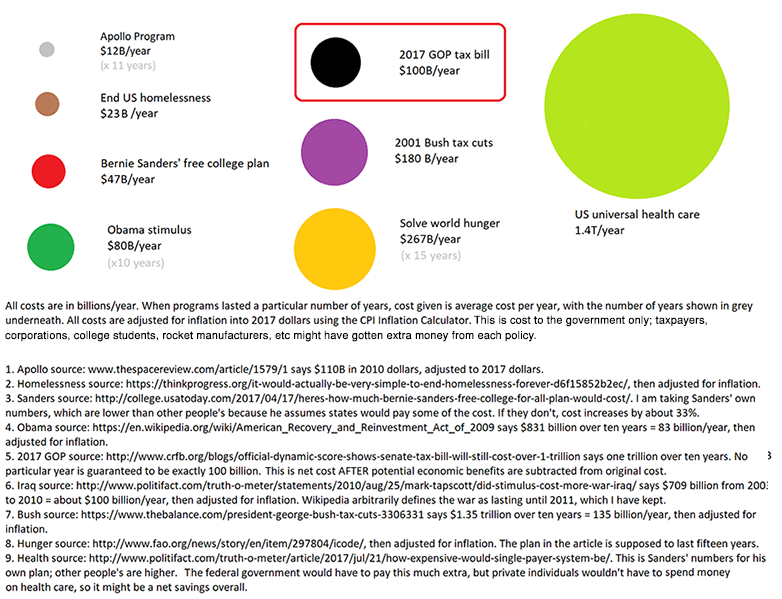
Here is the cost of the current GOP tax bill placed in the context of other really expensive things. Although it’s not quite enough money to solve world hunger, it’s enough to end US homelessness four times over or fund nine simultaneous Apollo Programs.

I’m writing this post sort of as penance. During the primaries, I wrote a post arguing that Sanders’ college plan was bad. And compared to any reasonable use of the money, I still think that’s true.

But I worry that people – including me – focus way too much on the kind of bad idea that tries to help people but ends up being too expensive, and not enough on the kind of bad idea where there’s only the thinnest veneer of a claim anyone will be helped at all. If Sanders had been elected, and we were debating his college plan, people would be worried. The affordability of every piece of it would get run over with a fine-toothed comb. Its irresponsibility would be noticed.

Well, instead of Sanders we got Trump. I won’t say nobody’s talking about the tax plan – the problems with it have been all over the news – but are our fiscal irresponsibility detectors being triggered twice as strongly as they would if it was Sanders’ college plan we were considering?

There must be a toxoplasma effect going on here, where things that are possibly bad get debated to pieces, because debating them is so much fun – but things that are definitely bad, things that nobody likes, get through much more easily. Even more pessimistically, if Sanders proposed free college for everybody, it would get a lot of resistance precisely because the fact that so many people would benefit would make sure everyone knew about it and was thinking about it a lot and understood how big a deal it was. Since nobody except a few corporations benefits from the GOP tax plan, how do we even get a feel for how big and important it is?

Next election, if he’s running, I’m probably going to support Sanders, who seems like a decent person who really wants to help the poor. This is going to be a weird choice for someone who flirts with identifying as libertarian, given the whole socialism thing. But the thing is, we have antibodies to socialism. When people push socialism, we give it the scrutiny it deserves. I’m more worried about the things we don’t have antibodies to, and one of them is going to be passed by a joint session of Congress in the next week or two.

Posted in Uncategorized | Tagged | 600 Comments

Against Overgendering Harassment

About 30% of the victims of sexual harassment are men. About 20% of the perpetrators of sexual harassment are women.

Don’t believe me? In a Quinnipiac poll, 60% of women and 20% of men said they’d been sexually harassed. Opinium, which sounds like a weird drug, reports 20% of women vs. 7% of men. YouGov poll in Germany finds 43% of women and 12% of men. The overall rates vary widely depending on how the pollsters frame the question, but the ratio is pretty consistent.

The data on perpetrators is less clear. The best I can find is this Australian study finding that 21% of harassers are women. The German poll finds it’s 25%. I’m less confident on this one, but 20% seems like a conservative guess.

If you prefer anecdotes to data, you can sift through this Reddit thread with 2474 comments. For example:

I’m a junior ncm in the Canadian forces. I had a chief harass me daily which resulted in administrative actions when I tried resisting her abuse. My introduction to her was when she was telling the 20 or so people “Under her” that her dildos name is George…it went downhill from there and eventually she was groping me on the daily. I requested a geographic posting to get away from that lunatic and get an investigation underway but I was told by my WO that “these things happen for a reason”. Eight months later I was suicidal and that WO was signing my counselling and probation with her husband.

I went up to get a drink in a crowded bar and a rather large woman ruffled my hair and said ‘I like this one’. She then started thrusting into my backside. I wasn’t sure how to respond… I just kinda waited for it to stop. It was pretty uncomfortable and I felt kinda vulnerable. In the wake of all these sexual harassment stories, I looked back on this moment and considered for the first time that that was actual sexual harassment. Huh.

Don’t believe random Redditors, but do believe random bloggers? Then for what it’s worth I’ve been sexually harassed by two women, and I see no reason to think my experience is anything other than typical.

But then is it odd that so few of the recent high-profile victims of sexual harassment have been men, and so few of the high-profile perpetrators women? No. Everyone has made it clear from the start that they don’t want to hear about this. The viral Facebook message that started #MeToo – at least the one I saw – urged women to come forward with their stories of sexual harassment, and men to come forward with stories of times they perpetrated sexual harassment. The slogan “BELIEVE WOMEN” got enshrined into a mantra, pretty ominous if you’re a guy wondering whether people will believe your harasser’s story over yours. The mainstream media strongly discouraged men from coming forward with their own cases, with articles like I’m a man who has been sexually harassed – but I don’t think it’s right for men to join in with #MeToo. Their excuse was the usual – it’s not “structural oppression”, so it doesn’t count.

(The “structural oppression” model is false, by the way. Homosexual male harassment is more prevalent than the percent gay men in the population would imply, suggesting that gay men harass men more often than straight men harass women. The obvious explanation for gender differences in harassment has always been that men constitute 80% of sexual harassers for the same reason they constitute 83% of arsonists, 81% of car thieves, and 85% of burglars. Since most men are straight, most victims are women; when the men happen to be gay, they victimize men. Men probably get victimized disproportionately often compared to the straight/gay ratio because society views harassing women as horrible but harassing men as funny. If this theory is right then it’s men who are the structural victims, which means it’s your harassment that doesn’t count and you’re the ones who shouldn’t be allowed to talk about it. The “it only matters if it’s structural” game isn’t so much fun now, is it?)

Could this kind of ploy really shut up everybody? It didn’t have to. Men absolutely came forward with stories of harassment by high-profile women in Hollywood, and they were summarily ignored. By freak coincidence I came across this story from last month where Mariah Carey’s bodyguard accused her of sexually harassing him. Carey is much higher-profile than most of the men involved. But she didn’t even publish an apology, or a denial, or try to pick holes in his story. She just assumed nobody would care – and she was right.
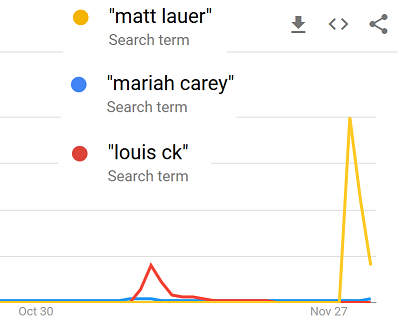
Having silenced or ignored all men who might be sexually harassed, the media proceeded to treat sexual harassment in the most gendered way humanly possible, constantly reinforcing that only men can do it and only women can suffer it. The Guardian, being commendably honest about its priorities: We Must Challenge All Men About Sexual Harassment. Newsweek worries about how Women Are Attacked By Men In Almost Every Workplace. The Independent thinks the story is how powerful men seemingly never face the consequences of their actions toward women.

On the meta-level, the same publications pushed the narrative that men can’t possibly understand sexual harassment, or men will never believe accusers’ stories, or men refuse to believe other men can be harassers. The Guardian writes about Men Who Are Silent After #MeToo, and the Washington Post about how Some Men Disagree About What Counts As Sexual Harassment. Do any women disagree about what counts as sexual harassment? Yes, the stats show that they disagree exactly as much as the men do – but who cares? The story is that women are always victims and totally understand exactly what’s going on, and men are always perpetrators with their fingers in their ears denying that a problem exists. We are told to worry about Why Women Don’t Report Sexual Harassment (against themselves) but about Why Men Don’t Speak Up About Sexual Harassment (that they see happening against women). Needless to say, every line of evidence we have shows men are less likely to report harassment that happens to them than women are.

Is this really that bad? Might the 3:1 ratio justify focusing on women? Our society already has an answer to this, and in every other case, the answer is no.

I mean, for one thing, we’re telling people to stop using the phrase “pregnant mothers” since sometimes transgender men get pregnant. It seems kind of contradictory to think of this as a pressing issue, but also think that the fact that only 30% of harassment victims are men means that we should always use female pronouns for generic harassment victims, and always generically call perpetrators “males in position of power”.

But there’s also a deeper issue. Suppose I write about how we need to do more to support the victims of terrorism. Sounds good. But what if I write about how we need to do more to support the Christian victims of Muslim terrorism? Sounds…like maybe I have an agenda. If I write story after story about how Christians need to be on the watch out for Muslim terrorists, but Muslims need to be on the watch out for other Muslims being terrorists, and if I tell Muslim victims of Christian terrorism to stay silent because that’s not “structural oppression” – then that “maybe” turns to “obviously”. This is true even if the numbers show terrorists are disproportionately Muslim.

Or suppose I write about how we need to do more to help the victims of crime. Again, sounds good. What if I write about how we need to do more to help white victims of black criminals? Again, this does not sound so good, unless you happen to be Richard Spencer. If I write articles like “We Must Challenge All Blacks About Crime” or “Whites Are Attacked By Blacks In Almost Every Neighborhood”, then probably I am Richard Spencer. This is true regardless of whether the statistics show a racial skew in perpetrators. Nobody would accept “yeah, but I’m right about what the ratio is” as an excuse that your motives were pure.

Frames like “We need to do more to support the victims of terrorism” are an attempt to come together to stop an important social problem. Frames like “We need to do more to support the Christian victims of Muslim terrorism” are a hit job on the outgroup. Do I think that sexual harassment is being used this way? I have no other explanation for the utter predominance of genderedness in the conversation.

I’ve previously talked about two visions of social justice. The first vision tries to erase group differences to create a world free from stereotypes and hostility. The second vision tries to attack majority groups and spread as many stereotypes as possible about them in the hopes that the ensuing hostility raises the position of minorities. I think the gendered nature of the conversation is deliberate, being done with exactly this vision and for exactly the same reason some people talk about “Christian victims of Muslim terrorism”. I think this is unfortunate. Why?

Because it ensures that nobody has more than half the picture.

I wonder if the woman who wrote this knows any of her close female friends who are harassers?

I mean, statistically, some of them have to be. According to the German study, 6% of women admit to being harassers. Know more than a dozen women? One of them’s probably a harasser. Don’t know which one it is? Congratulations, now you can understand why some men don’t know which of their same-gender friends is a harasser either.

There’s a truism that rich people can’t understand what it’s like to be poor. Why don’t you just get a minimum wage job, earn $7/hour = $60/day = $18000/year, save half of it, after few years you’ve got enough to go to a cheap college and get your ticket to the middle class? It’s possible to figure out what’s wrong with this from a third-person perspective, but it’s much easier to get the first-person perspective and be like “Oh, I guess that’s what it’s like”.

The reason this tweeter can’t understand how it’s hard to believe that your friends are sexual harassers is because she’s never tried to consider the question from a first-person perspective. I predict the sort of person who makes tweets like this is exactly the sort of person who would say “How dare you say any of my female friends could be sexual harassers! Don’t you even understand structural oppression?!”

Likewise, do you think this woman knows any men who are victims of sexual harassment? If you were a man who’d been sexually harassed, would you admit it to this woman and expect a sympathetic ear? Once she contemplates why she doesn’t know so many men who have been sexually harassed, maybe she’ll understand why some men don’t know so many women.

But more than that, if men were included in the conversation – if it were understood that a man who was sexually harassed by a female Hollywood celebrity would have the slightest chance at a fair hearing – then maybe they would feel like it was more in their self-interest to support victims.

And if women were included in the conversation as potential perpetrators, they might understand why some people find it scary when people lose their careers over unsubstantiated allegations.

Instead, since we’ve chosen a narrative where one side can only ever be a victim and the other can only ever be perpetrators, we’ve made it impossible for anyone to see both perspectives. Self-interested men worry only about how to avoid allegations, self-interested women worry only about how to make sure all allegations are believed, and nobody worries about how to make a system where they expect fair treatment no matter which role they find themselves in.

The solution is to treat harassment the same way we treat terrorism. It’s something that’s bad. It’s something that some groups might do more often than other groups, but this is not the Only Relevant Factor About It, and we are suspicious of people who seem more interested in stereotyping the groups involved than in making sure everyone of every group gets justice.

And once we get good evidence that someone is guilty, we have drones bomb their house. Seriously, the terrorism model has a lot going for it.


OT90: Telescopen Thread

This is the bi-weekly visible open thread. Post about anything you want, ask random questions, whatever. You can also talk at the SSC subreddit or the SSC Discord server. Also:

1. Comments of the week: last open thread we talked about standing-room-only flights, and of course bean chimed in with some knowledge of the economics of airline travel (1, 2).

2. The rationalist community is holding various Solstice celebrations this month. I’ve been asked to advertise Seattle in particular, but there are other ones in NYC, Berkeley, Boston, Columbus, Nashville (Ohio), Silicon Valley, and Chapel Hill – see this site for details, and keep in mind some are as early as the 9th. Also, I think the Sunday Assembly is running a lot of them – the only ones I can certify as definitely rationalist-affiliated are Berkeley, Boston, Seattle, and (mostly) New York.

3. David Friedman (author of the legal systems book recently profiled here) is holding a San Jose SSC meetup at 3806 Williams Rd on Saturday 12/9 2:00 PM. Go for the interesting discussion, stay for the authentic medieval Islamic cooking.

Posted in Uncategorized | Tagged | 1,184 Comments